Call Us: (440) 975-8802




Marking Technology
Electrochemical Etching Equipment and Machine
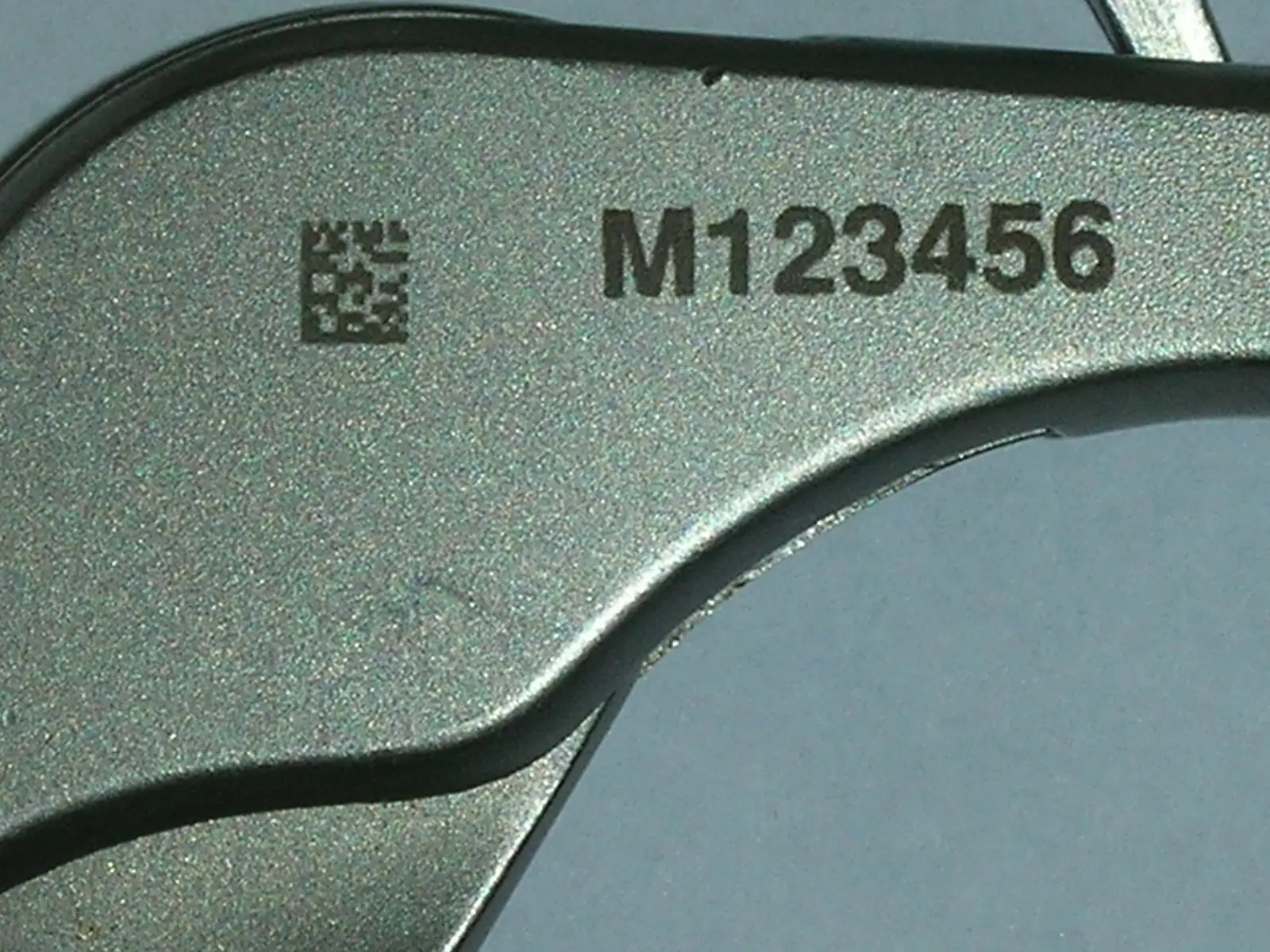
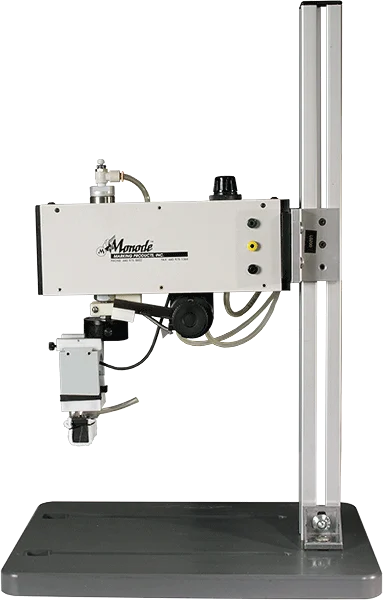
A controlled, current-driven process that marks metal in under a second, permanent, legible, and gentle enough on the part that it's the standard for surgical implants. We build the etching systems, formulate the electrolytes that run through them, and manufacture the stencil paper that shapes every mark, all in-house.
75-Plus Years, Family-Owned Across Three Generations.
Marking has been the constant through every generation since 1956.
Standards Authority on Staff.
We hold the original electrochemical etching patent, and a contributing author to MIL-STD-130 and other industry standards works alongside our engineering team.
Same-Day Service Commitment.
Backed by secured on-site stock and a customer service desk monitored around the clock.
In-House, Start to Finish.
From electrolyte formulation to stencil paper manufacturing, we keep the entire etching chain in Monode-owned Ohio facilities.
Watch the Mark Happen
Stencil down. Current on. Mark done, typically in under a second for a shallow etch. Neutralize, apply a protective oil, and the part is ready to move.
How Electrochemical Etching
Works
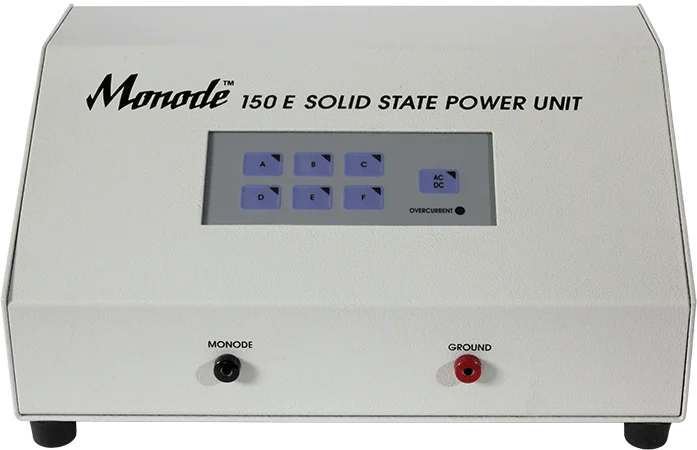
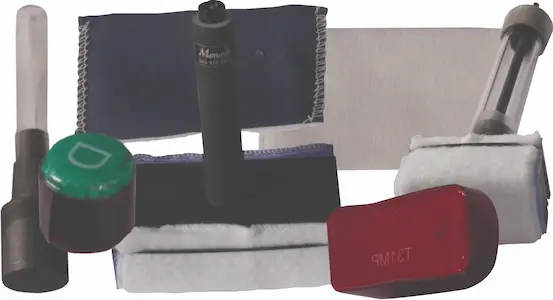
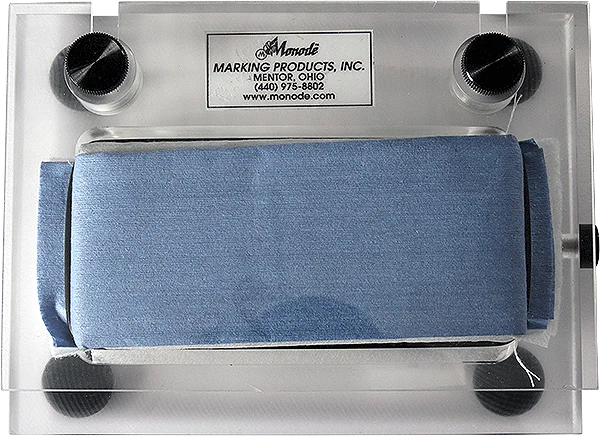
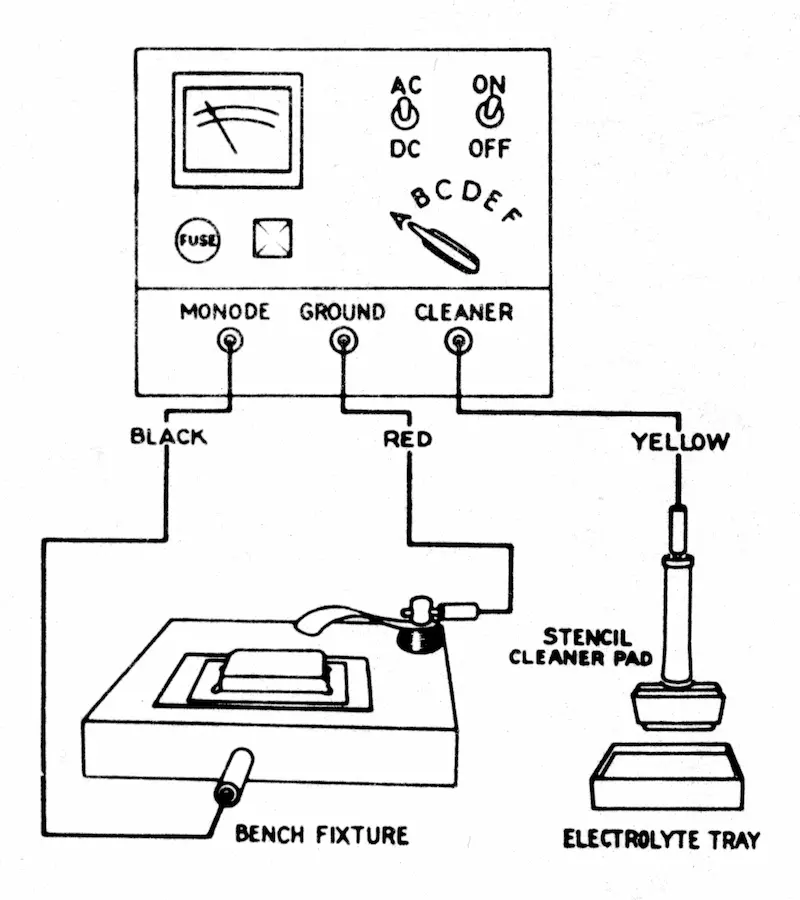
A controlled electrochemical reaction, not a cut. A stencil defines the mark: its microscopic openings form the logo, serial number, text, or image, and it sits directly against the metal. A small amount of electrolyte, selected for the base metal, wets a marking pad positioned over the stencil. The part becomes part of an electrical circuit, one lead connects to the metal, the other to the marking head. When the wet marking head contacts the stencil, current passes through the electrolyte and the stencil's open areas, and the reaction creates the mark, permanently, without a cutting tool ever touching the part. No heat-affected zone. No stress on the base material. No tool wear against the part.
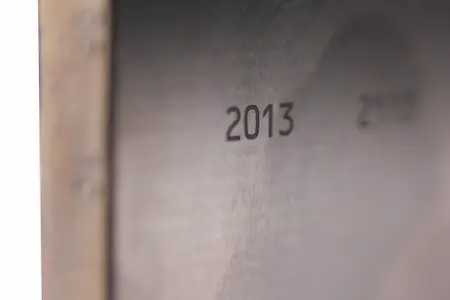
Shallow etch deposits a contrasting surface mark roughly one ten-thousandth of an inch deep (about .0001"). It's fast, typically under a second, and runs on AC current. Mark color depends on the base metal: some stainless steels yield a dark brown mark, while other alloys can produce a jet black mark with the right electrolyte.
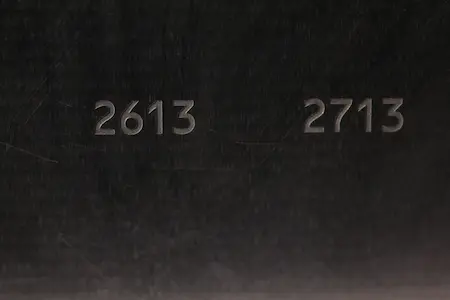
Deep etch uses a DC power unit to remove metallic ions from the surface, cutting a true depth into the part, typically .001" to .003" and deeper when needed. Beyond about .003", a pulsating power unit with a timer is recommended: the pulse takes advantage of the peak power surge at the start of each cycle to cut etch time and reduce heat buildup in the stencil, marking head, and part.
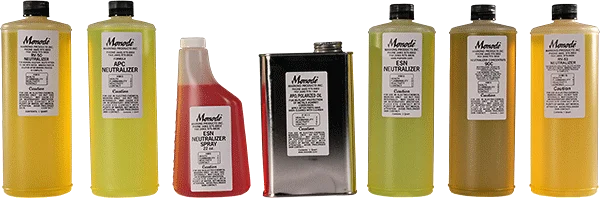
Neutralizing isn't optional. Etching is a chemical reaction, and any residual electrolyte left on the part becomes a corrosion risk. Every etched part gets neutralized (by wiping or by soaking, depending on the part and volume) and typically finished with a protective oil.
Inventors of Electrochemical Etch Marking
Electrochemical etching has aerospace in its bones. Most aircraft engine components were hand stamped before jet engines changed the equation: a hand-struck mark left micro-fractures that jet engine metal couldn't tolerate.
In 1943, the Army Corps of Engineers came to Cleveland with the problem. Lectroetch worked out the answer: a controlled, current-driven etch that marks a part without ever striking it, patented as US2334698A. It became the standard for jet engines and other precision components where stress fractures aren't an option.
Monode was founded in 1956 as an offshoot of that same Cleveland etching lineage. Our name comes directly from the science: cathode plus anode equals Monode. We've since acquired Lectroetch outright, so the original patent and the invention itself now belong to Monode. Every standard written for electrochemical etching today traces back to the process we own.
In-House From Chemistry to Paper
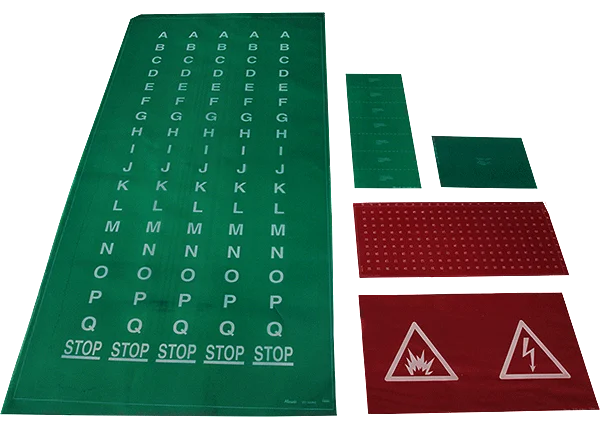
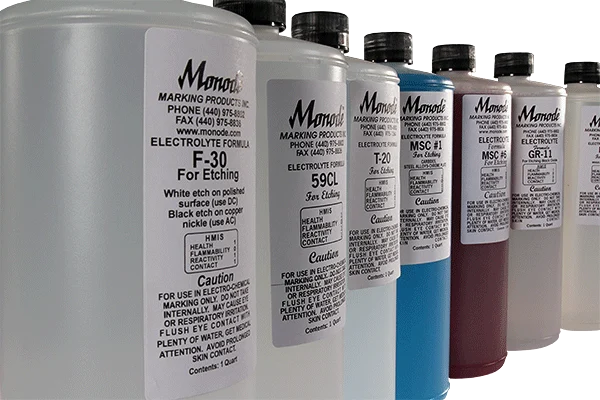
We don't just build the machine and point you to a third-party supplier for everything it needs to run. Our electrolytes are formulated in-house, and so is our stencil paper. When you buy an etching system from us, you're buying the whole chain, not just the box.
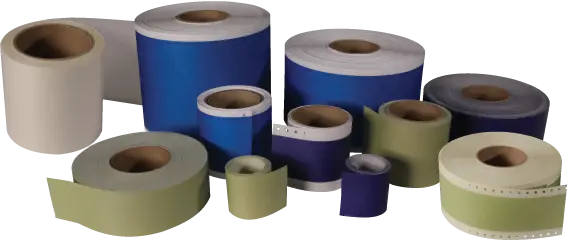
The Last Original Stencil Paper Maker
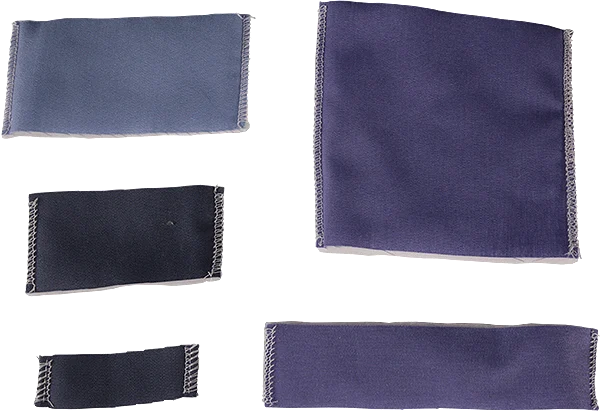
Monode is the only original manufacturer of electrochemical etching stencil paper left in the world. Competitors either resell our paper, substitute imported paper of lesser quality, or tell customers it isn't made anymore. It is. We are the ones who make it.
Built for the Body
Etching doesn't create the microscopic surface craters where bacteria can hide in after sterilization. That physical difference is more than just a regulatory checkbox. It’s why electrochemical etching remains a leading marking method for surgical instruments and implants. We've supported real surgical-instrument traceability work with a major health system and a sterilization partner.
Grid Marking, Done Right
We manufacture both the machines and the stencils behind grid marking, the square or circular grid patterns applied to sheet metal before forming so engineers can measure how the material actually stretched. It's a small niche with a direct line into automotive tooling and stamping-die tryout, and it's an area where we deliver results.
The system is never the whole cost.
Buy an etching system without the electrolyte support to run it, without the right stencil paper on hand, or from a supplier who tells you your old paper "isn't made anymore," and you'll find that out the expensive way: mid-run, when the wrong chemistry gives you a mark that won't pass inspection.
We sell the whole chain because we make the whole chain. Talk to us before you commit to a system, not after it's already underperforming. Request a free test mark
| Criteria | Electrochemical Etch | Dot Peen | Laser | Steel Stamp | Scribe |
|---|---|---|---|---|---|
| Contact with part | Stencil contact, no impact | Impact (pin strike) | Non-contact | Impact (struck) | Continuous contact, no impact |
| Heat-affected zone | None | None | Yes (pulsed mode) | None | None |
| Typical mark depth | .0001" (shallow) to .003"+ (deep) | Shallow to deep, dot-matrix (pneumatic reaches deeper) | Surface to shallow | Deepest of the five | Shallow, depth varies with stylus pressure |
| Speed | Under 1 sec (shallow) | Fast | Fast | Single strike | Continuous, speed scales with line length |
| Stress-fracture risk to part | Very low | Low | Very low to high, depends on settings | Higher on hardened/thin material | Low to medium |
| Common substrates | Most metals, incl. exotic alloys | Most metals, some plastics | Most metals, some plastics | Metals suited to impact | Most metals, depending on hardness |
| Medical/implant compatibility | Strong (no surface craters) | Not typical | Depends on mode | Not typical | Not typical |
| Best fit | Precision marks on aerospace, medical, and exotic-alloy parts; also general-purpose marking for hand tools and knives | General-purpose permanent marking | High-speed, non-contact, serialized marking | Deepest, most permanent mark on suitable metals | Parts marked before painting or powder coating; quiet, low-vibration environments |
▪ Frequently Asked Questions
Electrochemical Etching FAQs
Ready to Support Your Etching Needs When You Are
Get a quote on the system you need, request a test mark on your actual part, or spend five minutes with an engineer who’s solved this exact marking problem before. However you want to start, we’re ready.